Cost of Mobile App Development in India: A Complete Breakdown – JSV Tech Flux Pvt Ltd
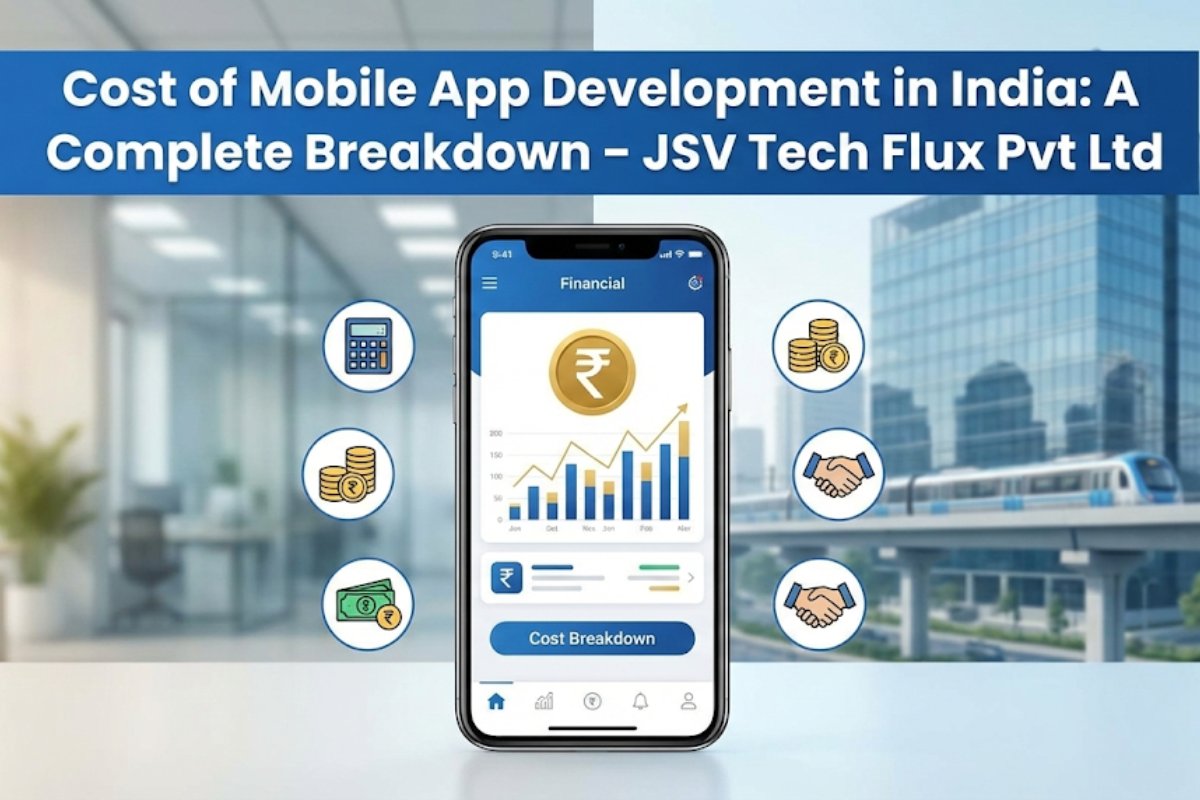
Introduction Many businesses in India ask this question when looking to start a mobile application development project. "How much does a mobile application cost to develop in India?" The answer is—It depends on several variables. There is a significant amount of variation in the costs for developing a mobile application depending on the application's features, the platform used (Android vs. Apple), design complexity, and long-term requirements for the application. By understanding these variables, businesses can plan their budgets accurately, and take into account the potential for hidden costs. This blog will provide clarity to businesses with respect to mobile application development costs, and will allow business owners to make better decisions. Average Approximate Cost of Developing a Mobile Application in India The price for developing a mobile app will vary, but these are average approximate costs based upon the type of mobile application: Type of Application Approximate Cost (INR) Basic (Static Content) ₹80,000 - ₹2,00,000 Standard (Business) ₹2,50,000 - ₹6,00,000 Advanced (Customized) ₹6,00,000 - ₹12,00,000+ Enterprise/SaaS ₹12,00,000 - ₹25,00,000+ Note that these prices are only for the actual development of the mobile app, and do not take into account the cost of marketing and hosting and/or any other third-party services. Key Factors That Affect the Cost of Developing a Mobile Application Platform - Android/Apple or Both Typically, developing only an Android App would cost less than developing only an Apple App in India. Developing an Apple App may be slightly more expensive due to Apple's stringent design standards and testing requirements. Cross-platform apps (Android and Apple) will generally be more expensive during development, but will save the developer time in the long run. Choosing the best platform for a business's mobile app is key to being able to realize an ROI (Return on Investment) through the development of the application. The total cost of an app is most affected by the amount and complexity of features. Here's a breakdown of basic vs advanced features of an app: a. Basic Features of an App - typically 3 or 4 basic features: User Login Easy Navigation Static Content b. Advanced Features of an App - typically 5 to 7 advanced features: Payment Gateway Real-Time Chat Push Notifications GPS Tracking Integrations with APIs Administrator Control Panel More features greater than 3-4 = more time to develop = more cost. 2️⃣ UI/UX Design of App: Simpler User Interface = less cost Custom Animations, Custom Transitions, Premium UI design will consume more development resources. However, well executed UI/UX will also prepare your application for: Higher user engagement (People using your application more frequently) Greater retention (People using your application, once acquired, will continue to use it) Justification for a greater initial investment in development. 3️⃣ Requirements for the Backend and Database: If your application will store user-related data, will provide real-time updates, will store data in the cloud or needs to scale to a very large-scale cloud infrastructure, then your application will require a significant strong backend and will increase your overall application cost. 4️⃣ Integration of Third Party Services: Third-party integrations such as: Payment Gateways Mapping Services CRM Services Analytics Platforms Will typically require additional development resources and payments. 5️⃣ Continual Maintenance and Updates: Your application will need to be supported and maintained after the launch. The long-term costs of support and maintenance would include: Repairing Bugs Adding New Features Compatibility with New & Updated Operating Systems Performance Tuning The annual cost of maintaining your application post-launch would be approximately 15% – 25% of the original cost of development. 6️⃣ Android vs. iOS Application Development Cost Comparison. In summary, regarding iOS and Android application development costs: Ways to Save a. Providing an all-inclusive version one b. Don’t factor in the high cost of ongoing maintenance c. Choosing the lowest cost, least experienced, vendor d. Failing to clearly define the features An incremental development approach will save money and time. Development of Android applications are generally inexpensive. Ways to Save on Your App Development Costs (smart) To save money on app development, you will want to focus on the following methods: Start with an MVP (minimum viable product): Prioritize the features that are essential to users. Use a scalable architecture. Plan for future upgrades. Work with reputable, experienced development partners. At JSV Tech Flux India Pvt Ltd., we assist companies in the strategic planning of the mobile apps we build with them, so they can optimize their costs, performance, and scalability at the start of their projects. Websites as compared to Apps - Cost Analysis There is a high likelihood that if a business has limited budget, they will: Start with a high-performing website Confirm demand Invest in a mobile app after they have built up traction Doing this reduces financial risk and improves your ROI. Conclusion Mobile application development in India, on average, is less expensive than in other parts of the world. However, there are factors that affect the overall cost of the final product. These factors include: Having a clear understanding of the cost components Proper planning Effective execution By understanding the cost components associated with developing an app (proper planning and execution), businesses can avoid overspending and creating apps that provide little or no value to their customers.